
Table of Contents
ToggleDesigning a teen boy’s bedroom isn’t about creating a showroom, it’s about building a functional space where he’ll sleep, study, hang out, and maybe even do his laundry without being asked twice. Unlike younger kids who outgrow themes in months, teens need rooms that reflect their evolving interests while handling the wear and tear of daily life. Whether you’re working with a 15-year-old who’s into gaming, an 18-year-old heading to college soon, or a 16-year-old athlete, the goal is the same: create a room that’s equal parts practical and personal, without requiring a full renovation every year.
Key Takeaways
- Teen boy bedroom ideas succeed by balancing functionality with personal style, prioritizing flexible furniture, durable finishes, and storage solutions that are actually used rather than themed décor.
- Creating distinct functional zones—sleep, study, gaming, and storage—requires measuring your space accurately and placing furniture strategically around outlets, door swings, and structural features.
- Space-saving solutions like loft beds, platform beds with drawers, and wall-mounted desks can free up 25–30 square feet in smaller rooms while maintaining comfort and practicality.
- Task lighting and ergonomic desk setups with at least 48 inches of width are essential for gaming and study zones; pair with an adjustable chair supporting proper posture during long sessions.
- Neutral color schemes like charcoal gray, navy, or forest green provide a timeless backdrop that’s easy to update as teen interests evolve without requiring full renovations.
- Storage that’s easy to access—such as closet rod upgrades, under-bed rolling bins, and wall-mounted pegboards—encourages your teen to actually use it rather than leaving items scattered.
Understanding Your Teen’s Style and Needs
Start by having an actual conversation. Ask what he needs the room to do, study space, gaming setup, workout area, instrument storage, and what drives him nuts about the current layout. A 15-year-old boy’s bedroom ideas will differ from what an 18-year-old wants: younger teens might lean toward posters and LED strips, while older teens often prefer cleaner, more mature aesthetics that’ll transition to college dorms or first apartments.
Key functional zones to consider:
- Sleep zone: Bed placement away from windows if street noise is an issue
- Study/work zone: Desk with task lighting, within 6 feet of outlets for laptop and charger access
- Social zone: Seating (bean bags, floor cushions, or a small couch if space allows)
- Storage zone: Closet organization, shelving, under-bed drawers
Most teen boys care less about throw pillows and more about whether their gaming monitor fits on the desk without blocking the window. Measure the room, actual dimensions, not guesses, and note outlet locations, door swing radius, and any structural quirks like sloped ceilings or radiators that limit furniture placement.
If he’s into a specific hobby, skateboarding, music production, car culture, consider how to incorporate storage and display without turning the room into a themed kids’ space. Wall-mounted guitar hangers, skateboard racks, or floating shelves for collectibles keep interests visible without cluttering horizontal surfaces.
Space-Saving Furniture Solutions for Teen Bedrooms
Teenage boy bedroom ideas that work in smaller rooms (10×10 or 12×12 feet) require furniture that pulls double duty. Standard twin beds (39″ x 75″) waste vertical space: consider a loft bed or platform bed with built-in storage instead.
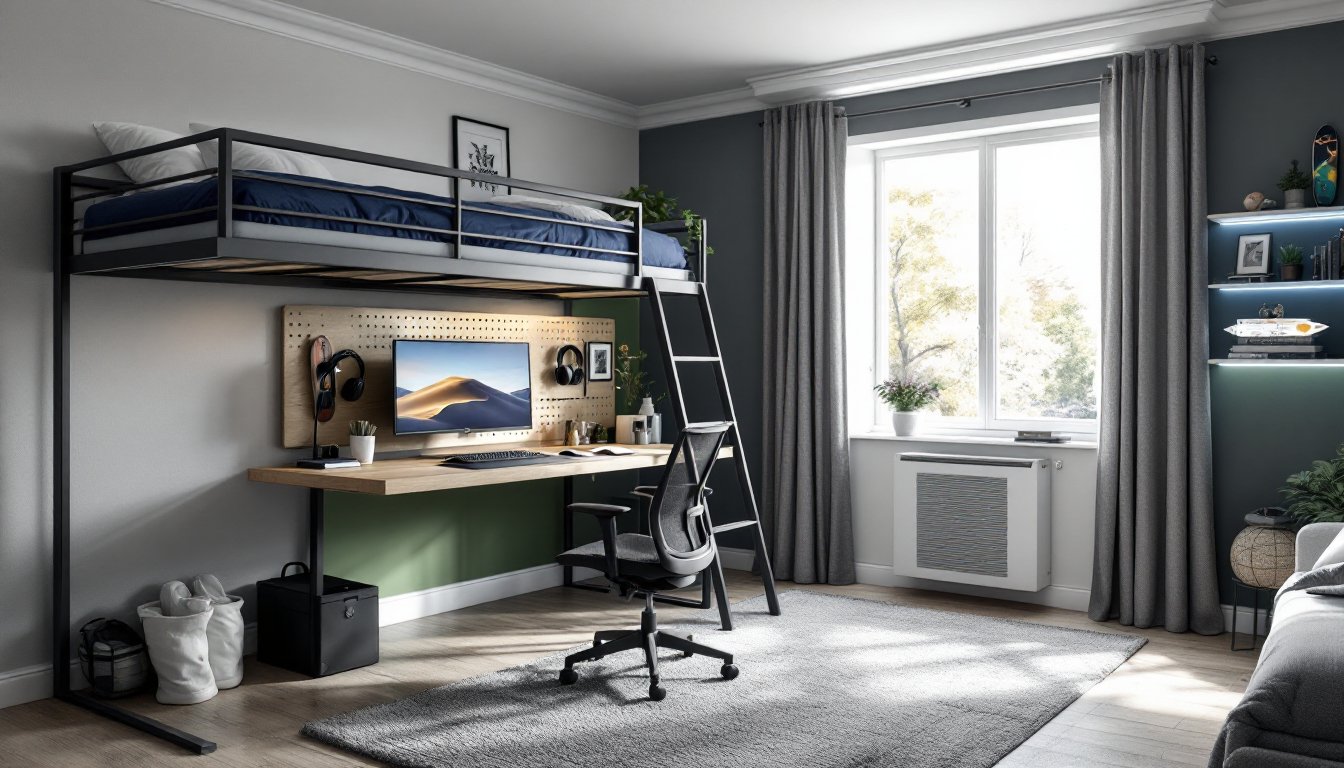
Loft beds free up 25-30 square feet of floor space underneath for a desk, seating, or storage. Most metal loft frames require assembly with hex wrenches and hold up to 250 lbs on the sleeping deck, verify weight capacity if he’s taller or heavier. Ceiling height matters: you need at least 7.5 feet of clearance for comfortable sitting headroom below, and most lofts position the mattress 5-6 feet off the floor.
Platform beds with drawers (sometimes called captain’s beds) offer 6-12 cubic feet of storage in the base. They sit lower than lofts, 18 to 24 inches high, and work better if ceiling height is limited or if he’s not comfortable climbing a ladder nightly.
For desks, skip bulky corner units. A wall-mounted floating desk (48″ x 24″) or a simple console table (30″ deep) paired with a filing cabinet creates workspace without dominating the room. Many budget-friendly desk setups use shelf brackets and a solid-core door or butcher block countertop cut to length, total cost under $100 if you skip prefab options.
Modular shelving like cube organizers (13″ or 15″ cubes) can be stacked, reconfigured, or used horizontally as benches. Anchor tall units to studs with L-brackets to prevent tip-over, use two #8 screws into each stud, spaced 16 inches on center.
Color Schemes That Work for Teen Boys
Teen boy bedroom decor doesn’t have to default to navy and gray, but those neutrals work because they’re forgiving and easy to update. Paint is the cheapest way to transform a room, one gallon of interior latex covers roughly 350-400 square feet and runs $25-$50 depending on quality.
Popular color directions for 16-year-old boy bedroom ideas:
- Charcoal or slate gray walls with white trim, adds contrast without feeling dark if you use a matte or eggshell finish
- Navy accent wall behind the bed, with remaining walls in light gray or off-white
- Olive green or forest green, on-trend in 2026 and pairs well with wood tones and black metal accents
- Two-tone walls: darker bottom half (wainscot height, around 32-36 inches) with lighter upper walls, visually lowers ceiling height, good for tall rooms
If he wants black walls, compromise with one accent wall. Full black rooms absorb light and make spaces feel smaller: you’ll need more task lighting to compensate.
Avoid high-gloss finishes on walls, they highlight every ding and scuff. Eggshell or satin finishes clean easier than flat paint and hide minor imperfections. Always prime first if painting over dark colors or glossy surfaces: use a stain-blocking primer like Zinsser BIN or Kilz if covering old wall decals or stains.
For trim and doors, semi-gloss white is standard, it’s durable and creates crisp contrast. If he’s older (18-year-old boy bedroom ideas trending toward minimalism), consider matte black hardware (hinges, door handles, curtain rods) to tie the scheme together without repainting everything.
Creating Functional Study and Gaming Zones
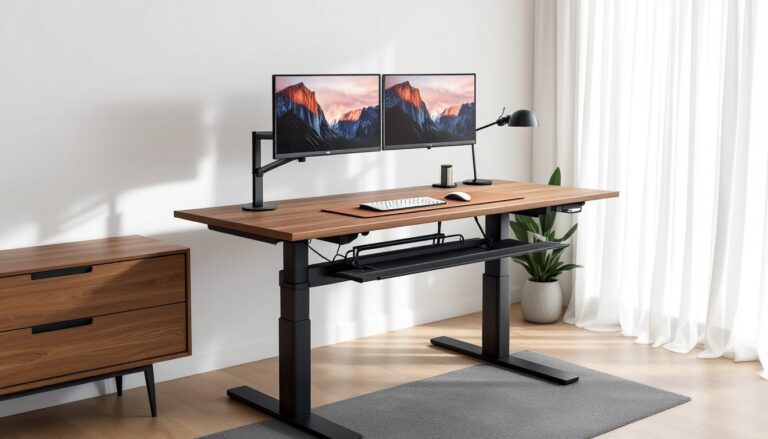
A proper desk setup needs three things: adequate surface area, good lighting, and accessible power. Most gaming or study setups require at least 48 inches of desk width for a monitor (or two), keyboard, and notebook space. If he games, expect a 24-27 inch monitor, mechanical keyboard, mouse, and possibly a console, budget 60 inches if possible.
Desk height should be 28-30 inches for ergonomic seating. Pair it with an adjustable chair (seat height 17-21 inches) that supports proper posture during long study or gaming sessions. Skip the $50 race-style gaming chairs, they’re mostly marketing. A mid-range office chair with lumbar support and adjustable armrests lasts longer.
Task lighting matters more than overhead fixtures. A swing-arm desk lamp or LED strip under a floating shelf provides focused light without glare on screens. Position the lamp to the left if he’s right-handed (vice versa for lefties) to avoid shadows while writing.
For cable management, use a simple power strip organizer mounted under the desk with adhesive clips or screws. Route cables through a cable sleeve or use binder clips on the desk edge to keep cords from sliding off. It’s not glamorous, but tripping over power cables is a real hazard.
Tip for gamers: Wall-mount a monitor arm (VESA-compatible) to free up desk space and allow screen repositioning. Most arms clamp to desks 1-3 inches thick and support monitors up to 27 inches. Installation takes about 10 minutes with an Allen wrench.
If the room lacks a dedicated study nook, a corner desk fits into otherwise dead space and provides two wall surfaces for pinboards, shelves, or pegboard organizers.
Storage Solutions to Combat Clutter
Teenage boys accumulate stuff, sports gear, hoodies, tech accessories, and random junk that doesn’t belong anywhere. The trick isn’t more storage: it’s storage that’s easy to use.
Closet upgrades: Most builder-grade closets have one rod and a shelf. Add a double-hang closet rod to maximize vertical space, install the top rod at 80 inches and the bottom at 40 inches. Use the top for off-season clothes, the bottom for daily wear. This modification takes 20 minutes with a drill, a level, and closet rod brackets screwed into studs.
If the closet is shallow (less than 24 inches deep), use slim hangers (0.25 inches thick) instead of standard plastic hangers (0.5 inches) to gain 2-3 inches of clearable space per foot.
Under-bed storage: Rolling bins or drawers (6-12 inches high) slide under platform or standard beds. Look for options with wheels that lock, cheaper bins use fixed wheels that roll out every time the bed shifts.
Wall-mounted solutions:
- Pegboard panels (4×4 feet) mounted to studs with 1×2 furring strips create customizable storage for headphones, controllers, hats, keys
- Floating shelves (48″ x 10″) installed with heavy-duty brackets hold books, collectibles, or bins, anchor to studs with 3-inch screws for weight capacity up to 50 lbs per shelf
- Hooks and racks: install coat hooks 60 inches high for jackets and bags: skip adhesive hooks for anything heavier than 5 lbs, they fail
For teen boys bedroom ideas focused on sports equipment, vertical storage works best. Wall-mount bike hooks, skateboard racks, or ball cages to keep gear off the floor. Use heavy-duty toggle bolts (rated for 50+ lbs) if studs aren’t positioned where you need them.
Personal Touches: Decor and Lighting Ideas
Personalization doesn’t mean plastering every surface with posters. A few intentional touches go further than clutter.
Lighting layers create mood and function:
- Overhead: Flush-mount or semi-flush ceiling fixture for general lighting (60-75W equivalent LED)
- Task lighting: Desk lamp, clip-on reading light, or adjustable wall sconce near the bed
- Accent lighting: LED strip lights behind the headboard, under shelves, or around a mirror, most run on 12V DC adapters and stick with 3M adhesive
Install a dimmer switch on the overhead light (single-pole switch, around $15-$25). It’s a straightforward swap if you’re comfortable working with electrical, turn off the breaker, remove the old switch, connect the dimmer’s hot, neutral, and ground wires, and secure the faceplate. If you’re unsure, hire an electrician: improper wiring is a fire risk.
Wall decor that works for 15-18-year-old bedroom ideas:
- Framed prints or posters in matching frames (black or wood), skip the thumbtacks and tape
- Corkboard or fabric pinboard (4×3 feet) for photos, tickets, schedules
- Large canvas prints or metal signs related to hobbies (cars, music, sports teams)
- Removable wall decals if painting isn’t allowed, peel-and-stick designs remove cleanly from most painted drywall
Avoid damage by using picture-hanging strips rated for the frame weight, or install proper picture hooks with nails angled into drywall at 45 degrees. For heavier items (mirrors, shelves over 10 lbs), locate studs with a stud finder and use wood screws.
Textiles add warmth without commitment. Swap out bedding (duvet covers are easier than comforters), add a rug (5×7 or 8×10 feet) to define zones and reduce noise, or hang blackout curtains if he’s a late sleeper. Many room transformation projects prove that new paint and updated textiles deliver the biggest visual impact for the least investment.
Conclusion
Teen boy bedroom ideas work best when they balance current interests with future needs. Focus on flexible furniture, durable finishes, and storage that actually gets used. Skip the themed kits and invest in quality basics, solid desks, proper lighting, and paint colors that won’t need a redo in six months. Let him personalize the details, and you’ll end up with a space he’s more likely to keep (reasonably) clean.