

Table of Contents
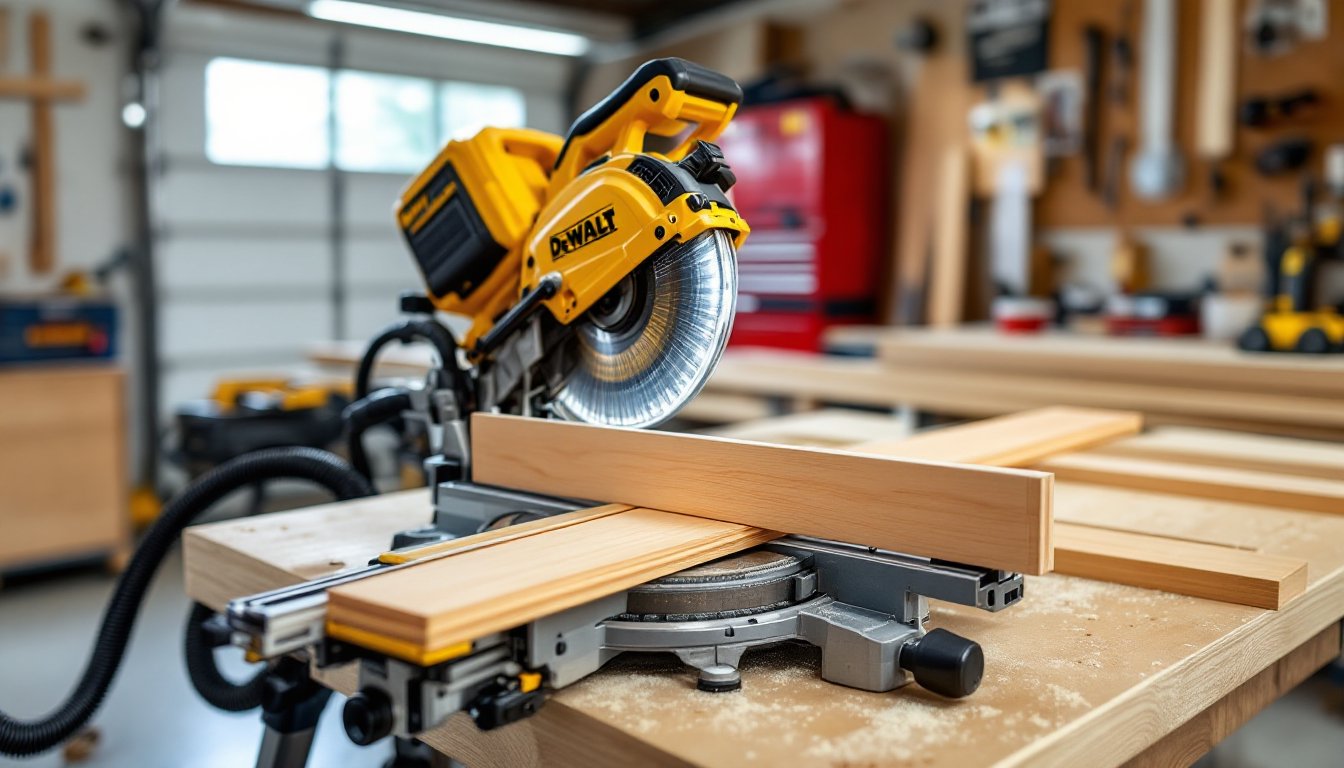
ToggleA compound miter saw is the workhorse of precision cutting, whether you’re framing a room, installing crown molding, or building a deck. For DIYers and home builders, DeWalt has long been a go-to name for reliability and performance. Their compound miter saws, especially the 12-inch models, deliver the accuracy and power needed for both rough framing and finish carpentry. But with multiple models on the market, from single-bevel to sliding compound miter saws, choosing the right one for your shop or jobsite can feel overwhelming. This guide breaks down what sets DeWalt apart, which features actually matter, and how to pick the saw that matches your project list.
Key Takeaways
- DeWalt compound miter saws offer XPS cross-cut positioning systems and durable engineering that deliver repeatable, accurate cuts for trim work, framing, and custom woodworking projects.
- Choose between sliding and fixed saws based on your work: sliding models handle wider stock up to 16 inches, while fixed saws are lighter and more affordable for standard framing cuts.
- Double-bevel compound miter saws eliminate the need to flip workpieces, saving time on crown molding and angled cuts, while single-bevel models suffice for basic framing and decking.
- The DWS780 (premium slider), DWS779 (mid-range slider), and DWS715 (fixed single-bevel) represent the most popular DeWalt options for home projects, each suited to different budgets and cutting needs.
- Regular maintenance—including dust removal, alignment checks, blade inspection, and lubrication of moving parts—keeps your DeWalt miter saw precise and prevents costly downtime.
- Always follow safety practices: secure workpieces, maintain clear hand distances from the blade, let the motor reach full speed before cutting, and unplug the saw when changing blades or performing maintenance.
What Makes DeWalt Compound Miter Saws Stand Out?
DeWalt didn’t earn its reputation by accident. Their compound miter saws combine durability with thoughtful engineering that shows up in real-world use. The company’s 12-inch miter saw lineup, including both fixed and sliding miter saw options, handles everything from 2×12 dimensional lumber to intricate 45-degree bevel cuts in hardwood trim.
One standout feature is DeWalt’s XPS cross-cut positioning system (on select models), which projects an LED shadow line onto the workpiece. Unlike laser guides that fade in bright sunlight or require constant calibration, the XPS adjusts automatically as the blade lowers, no batteries, no drift. If you’ve ever lost a laser line on a sun-drenched deck, you’ll appreciate this.
DeWalt also builds in jobsite-ready toughness. Stainless steel miter detents resist wear, cam-lock fences stay square through repeated adjustments, and tall sliding fences support crown molding vertically (up to 6-5/8 inches nested). Most models include dust collection ports that actually work with a shop vac, not a guarantee in this category. For contractors and serious DIYers who need repeatable cuts day after day, these details add up to less downtime and more consistent results.
Key Features to Look for in a DeWalt Compound Miter Saw
Not all features deserve equal weight. Here’s what to prioritize when comparing DeWalt models.
Blade Size and Crosscut Capacity
A DeWalt 12-inch miter saw cuts wider stock than a 10-inch model, important if you work with 2x12s for stair stringers or deck joists. The DWS779, for example, cuts a 2×16 at 90 degrees and a 2×12 at 45 degrees. If you mostly cut trim and 2x4s, a 10-inch saw saves weight and money. But for full-spectrum home projects, the 12-inch platform offers more headroom.
Bevel Range and Stops
Compound miter saws tilt the blade for bevel cuts. Most DeWalt models bevel 0–48 degrees left (single bevel) or both directions (double bevel, covered below). Look for positive stops at common angles, 0°, 22.5°, 33.9°, and 45°, which lock in quickly without fine-tuning. The 33.9° stop is a lifesaver for crown molding laid flat.
Slide vs. Fixed
A DeWalt sliding compound miter saw extends crosscut capacity significantly. The DWS780, one of DeWalt’s flagship sliders, handles up to 16 inches wide at 90 degrees thanks to its dual horizontal rails. That’s essential for cutting wide shelving, glued-up panels, or engineered lumber. Fixed saws (non-sliding) are lighter, more compact, and cheaper, fine for trim work and framing cuts under 12 inches.
Motor Power
DeWalt equips their 12-inch saws with 15-amp motors spinning at 3,800 RPM. That’s enough torque to cut treated 4x4s and hardwood without bogging down. Underpowered saws burn blades and leave burn marks on stock.
Portability
Most 12-inch DeWalt miter saws weigh 50–60 pounds (sliders can hit 70). If you move between jobsites, check for carrying handles and compatibility with rolling miter saw stands. The DWX726 rolling stand pairs well with any DeWalt 12-inch model and collapses for van transport.
Top DeWalt Compound Miter Saw Models for Home Projects
Here are the models that show up most often in home shops and on remodeling sites.
DeWalt DWS780 12-Inch Sliding Compound Miter Saw
The DWS780 is DeWalt’s top-shelf slider. It features the XPS cut-line system, a double-bevel design (more on that below), and a 16-inch horizontal cutting capacity. The tall sliding fence supports crown molding up to 7-1/2 inches vertically, and the DWS780’s precision has earned it praise for finish carpentry. It’s not cheap, but if you’re installing trim throughout a whole house or building custom furniture, the accuracy pays off.
DeWalt DWS779 12-Inch Sliding Compound Miter Saw
The DWS779 strips out the XPS system and some premium detents but keeps the same motor, slide rails, and cutting capacity. It’s a popular middle-ground option for DIYers who want the versatility of a 12 DeWalt miter saw without the flagship price. You’ll need to rely on the integrated laser (which runs on batteries) or align by eye.
DeWalt DWS715 12-Inch Single-Bevel Compound Miter Saw
This is a non-sliding, single-bevel saw. It’s lighter (42 pounds), less expensive, and still delivers the same 15-amp motor and miter range. Best for framing crews, deck builders, and anyone making repetitive 90° or 45° cuts where slide capacity isn’t needed. The compact footprint fits on crowded benches or rolling stands.
Single Bevel vs. Double Bevel: Which Is Right for You?
This is one of the biggest decision points.
Single-bevel saws tilt left only. To make matching bevel cuts on both ends of a board (like a picture frame), you’ll either flip the workpiece or walk around the saw. That’s fine for decking, framing, and simple trim, most cuts are miters, not bevels.
Double-bevel saws tilt both left and right, so you can bevel in either direction without moving the stock. This speeds up crown molding installation (cutting inside and outside corners back-to-back) and any project with compound angles. It also reduces setup errors since the board stays in the same orientation.
For occasional DIY projects, single bevel is enough. If you’re tackling a full kitchen remodel with crown, base, and window casings, or if you build furniture, the double-bevel DeWalt 12 sliding compound miter saw will save time and frustration.
How to Choose the Right DeWalt Miter Saw for Your Needs
Start by listing your most common projects. Be honest, there’s no point paying for features you won’t use.
Trim and Molding Work
Go with a sliding compound miter saw (like the DWS779 or DWS780) and prioritize double bevel. Crown molding, baseboard, and casing involve lots of bevel and miter combinations. The extra cut capacity handles wide baseboard (6–8 inches) and nested crown without awkward setups.
Framing and Deck Building
A fixed, single-bevel DeWalt 12 miter saw (such as the DWS715) handles 2x lumber, joists, and rafters with ease. You’re mostly cutting straight miters and crosscuts, so slide rails and double bevel add cost without benefit. Portability matters more, look for lighter models and invest in a rolling stand.
Furniture and Custom Woodworking
Accuracy is king. The DWS780 with XPS offers repeatable precision for joinery, and the double bevel saves time on angled cuts. Pair it with a quality 60-tooth carbide blade for clean cuts in hardwood. Budget for a quality stand or permanent bench mount: moving a 70-pound saw between setups invites alignment drift.
General Home Maintenance and Repairs
If you need a miter saw for occasional projects, replacing deck boards, cutting PVC trim, building a shed, the DWS779 offers excellent versatility without very costly. You’ll have the capacity for almost any home project without paying for features that sit idle.
Also consider your shop space. Sliding saws need 18–24 inches of clearance behind the fence (unless you get a rail-forward model). If you’re working in a single-car garage, a fixed saw might fit your bench better.
Essential Tips for Using Your DeWalt Compound Miter Saw Safely
Miter saws are statistically one of the safest power tools, if used correctly. Here’s how to keep all ten fingers.
Personal Protective Equipment (PPE)
Always wear safety glasses or a face shield. Miter saws throw chips and dust directly at your face. Use hearing protection, a 15-amp motor spinning a carbide blade hits 100+ decibels. If you’re cutting treated lumber or MDF, wear a dust mask or respirator. Connect a shop vac to the dust port: it won’t capture everything, but it cuts airborne particles significantly.
Secure the Workpiece
Never freehand. Always hold stock firmly against the fence and base, or use the saw’s clamp. If a board shifts mid-cut, kickback can happen. For narrow or small pieces, use a sacrificial backer board and clamp both.
Keep Hands Clear of the Blade Path
Your support hand should be at least 6 inches from the blade. On narrow stock, use a push block or hold the far end. Never reach across the blade, wait for it to stop spinning before retrieving offcuts.
Let the Blade Reach Full Speed
Don’t plunge the blade into the stock. Pull the trigger, wait for the motor to hit full RPM, then lower smoothly. Cutting before full speed stalls the motor, burns the wood, and risks blade binding.
Check the Blade Guard
The lower blade guard should retract smoothly and snap back into place. If it sticks, clean sawdust buildup or replace it. A jammed guard is a common cause of accidents, similar to safety issues addressed in workshops focused on tool maintenance.
Unplug When Changing Blades
Even with the trigger released, a bump can engage the motor. Always unplug the saw before loosening the arbor bolt. Use the spindle lock and a proper wrench, no pliers or adjustable wrenches that can slip.
Maintaining Your DeWalt Miter Saw for Long-Term Performance
A well-maintained miter saw delivers accurate cuts for decades. Neglect it, and you’ll fight drift, binding, and burnt edges.
Clean Sawdust Regularly
Dust clogs the slide rails, miter detents, and bevel pivot points. After every few hours of use, blow out the saw with compressed air or a shop vac. Pay attention to the lower blade guard, sawdust buildup causes it to stick. Wipe down the sliding rails and apply a dry lubricant (like PTFE spray) to keep them smooth. Avoid oil-based lubricants: they attract more dust.
Check and Adjust Alignment
Over time, fence and blade alignment can drift. Use a combination square to verify the blade is 90° to the table at the 0° miter setting. If it’s off, adjust the bevel stops per the manual (usually a hex screw behind the saw head). Check the fence for square against the table: loosen the fence bolts, realign with a framing square, and retighten. Misalignment compounds with every cut, catching it early saves material.
Inspect the Blade
A dull or damaged blade causes tear-out, burn marks, and motor strain. Carbide blades can be sharpened 3–5 times by a professional service (typically $15–$25). Replace blades with missing or chipped teeth immediately, they’re dangerous and ruin cuts. For general use, a 60-tooth combination blade handles crosscuts and miters cleanly. Keep a rough-cut blade (40-tooth) for framing lumber and treated wood.
Lubricate Moving Parts
The miter lock, bevel lock, and slide rails all benefit from periodic lubrication. Use dry or light machine oil as specified in the manual. Don’t over-lubricate, excess attracts sawdust.
Store Properly
If the saw lives in a garage or shed, cover it between uses to keep moisture and dust off the motor and electronics. Extreme temperature swings can affect calibration, so let the tool acclimate before precision cuts. For those managing multiple projects, workshop organization tips can help extend tool life and improve workflow.
Replace Brushes (If Applicable)
Most DeWalt miter saws use brushed motors. After several hundred hours, carbon brushes wear down and should be replaced (check the manual for specs). Symptoms include excessive sparking visible through the vents, loss of power, or intermittent operation. Brushes are inexpensive and user-replaceable on most models.