

Table of Contents
ToggleA Maytag dishwasher filter might seem like a minor component, but it’s the unsung hero keeping dishes spotless and the machine running efficiently. When food particles, grease, and mineral deposits clog this small but mighty part, you’ll notice cloudy glasses, lingering odors, and dishes that come out dirtier than they went in. Most homeowners never think about the filter until something goes wrong, but regular maintenance takes just five minutes and prevents costly repairs down the road. This guide walks through everything needed to locate, clean, and maintain a Maytag dishwasher filter, plus troubleshooting tips for when things don’t go as planned.
Key Takeaways
- A Maytag dishwasher filter is a critical component that traps food debris and prevents clogs, requiring regular maintenance to avoid costly repairs and warranty issues.
- Clean your Maytag dishwasher filter every 2–4 weeks under normal use, with frequency depending on household size and dishwashing habits—weekly cleaning is recommended for families running multiple daily loads.
- Remove the filter by twisting the upper cylinder counterclockwise and lifting out the lower flat filter, then rinse with warm water and soak stubborn deposits in vinegar for 15–20 minutes using a soft-bristle brush.
- Common signs of a dirty or clogged filter include cloudy glassware, standing water in the tub, foul odors, unusual noises, and dishes coming out dirty or gritty.
- If the filter is clean but problems persist, check the spray arms, detergent dispenser, water temperature, and drain hose before calling a professional technician for pump or control board issues.
What Is a Maytag Dishwasher Filter and Why Does It Matter?
The Maytag dishwasher filter is a cylindrical or flat mesh component located at the bottom of the dishwasher tub. Its job is simple but critical: trap food debris, prevent clogs in the drain pump, and keep particles from redepositing on clean dishes during the wash cycle.
Most Maytag models manufactured after 2010 use a self-cleaning filter system combined with a manual filter. The manual filter (sometimes called the upper filter assembly) catches larger particles and requires periodic cleaning. The self-cleaning grinder handles finer debris but can’t do the job alone, ignoring the manual filter leads to reduced water circulation, poor cleaning performance, and potential pump damage.
Unlike older dishwashers that relied solely on hard-food disposers (loud grinders that pulverized everything), modern Maytag filters prioritize quieter operation and energy efficiency. The trade-off? They need hands-on maintenance. A clean filter ensures proper water flow through the spray arms, prevents unpleasant smells from decomposing food, and extends the dishwasher’s lifespan. Neglecting this small task can void warranties or lead to repair bills exceeding $200 for pump replacements.
Where to Find Your Maytag Dishwasher Filter
Locating the Maytag dishwasher filter takes about 30 seconds once you know where to look. Pull out the bottom dish rack completely and set it aside. The filter assembly sits on the floor of the dishwasher tub, typically centered beneath the lower spray arm.
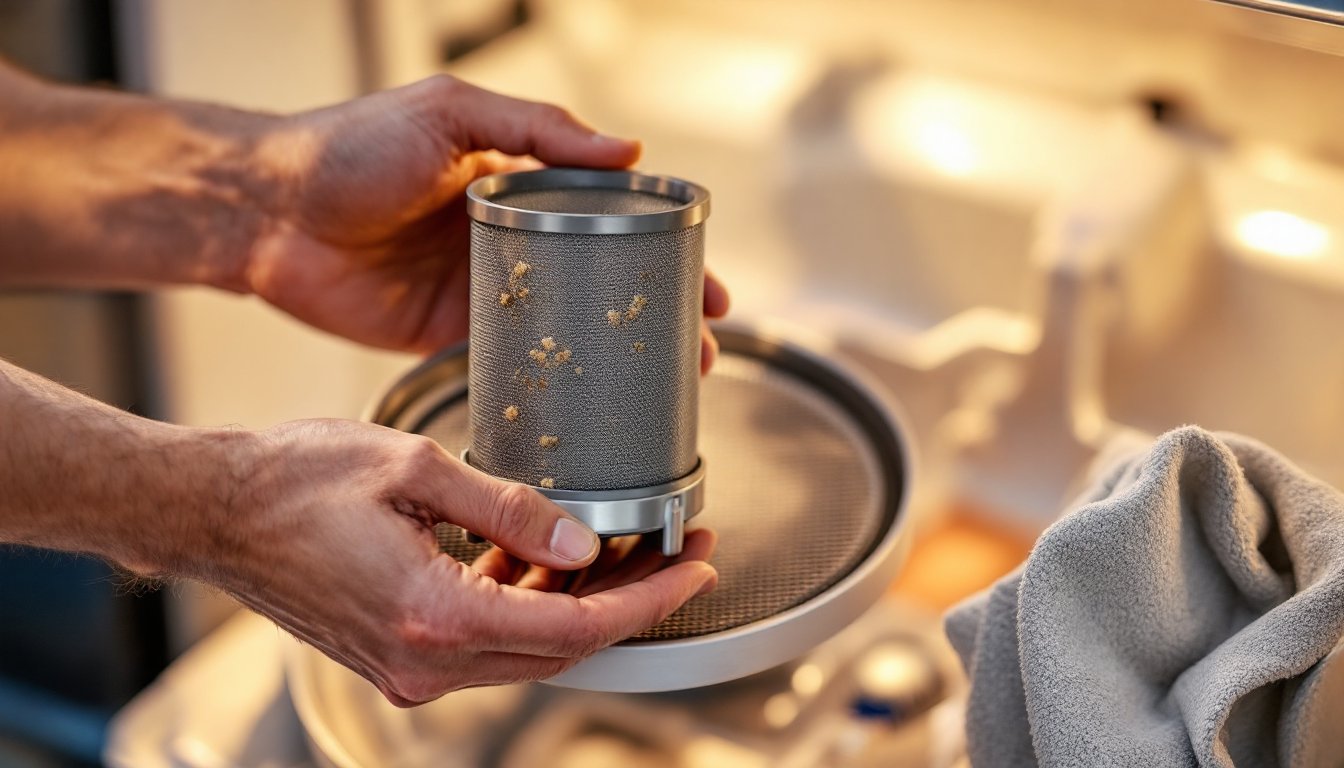
On most Maytag models, you’ll see a cylindrical filter assembly with a circular outer filter (resembling a coarse screen) and a smaller, finer inner filter or upper filter tube. Some models feature a flat, rectangular filter instead, check the owner’s manual if the layout differs from what’s described here.
The filter location remains consistent across popular Maytag series, including:
- Maytag MDB series (built-in models): Center of tub floor, twist-lock design
- Maytag WDF/WDT series (dishwasher drawers): Same position, but accessed from the drawer base
- Maytag Jetclean models: Beneath lower spray arm, often with a two-part filter system
If the spray arm blocks access, twist it counterclockwise (or lift, depending on the model) to remove it first. The filter assembly should be visible immediately. For models with a 577-1 filter (a common Maytag part number), the setup includes an upper filter cylinder and a lower flat screen, both need regular cleaning.
Still can’t find it? Check under any removable covers or caps on the tub floor. Maytag occasionally uses a protective screen that snaps off to reveal the filter beneath. When in doubt, the model number (printed inside the door frame) paired with a quick online search for “[model number] filter location” brings up diagrams.
How to Remove and Clean Your Maytag Dishwasher Filter
Safety first: Ensure the dishwasher is off and cool. Wear nitrile gloves if handling debris bothers you, there’s often slimy buildup.
Step-by-Step Cleaning Process
1. Remove the filter assembly
Grasp the upper filter cylinder (the tall, round part) and twist it counterclockwise about a quarter turn. Lift it straight out. If it resists, don’t force it, gently wiggle while lifting. The lower flat filter should lift out next, either by pulling up on a tab or simply picking it up. Some models have a single-piece filter: in that case, the whole unit comes out together.
2. Rinse under running water
Hold the filter components under warm tap water and rinse away loose debris. Use a soft-bristle brush (an old toothbrush works perfectly) to scrub the mesh screens. Pay attention to the tiny perforations, food particles lodge in these and restrict water flow. Avoid steel wool or abrasive pads, which can damage the fine mesh.
3. Soak stubborn buildup
For grease or mineral deposits that won’t rinse off, fill a sink or basin with warm water and add 1-2 cups of white vinegar or a few drops of dish soap. Submerge the filter and let it soak for 15-20 minutes. The acidity in vinegar dissolves hard water scale and cuts through grease. After soaking, scrub again with the brush.
4. Inspect and rinse the filter housing
While the filter is out, look into the filter housing (the cavity where the filter sits). Wipe away any debris, bones, or hard particles with a damp cloth. Check the drain area for obstructions. A weekly dishwasher cleaning routine prevents buildup in hard-to-reach areas.
5. Reassemble the filter
Place the lower flat filter back into the housing first (if applicable), then insert the upper filter cylinder. Twist it clockwise until it locks, usually a quarter turn. You should feel or hear a click when it’s seated properly. Reinstall the lower spray arm if it was removed.
6. Run a test cycle
Close the door and run a rinse cycle to verify everything’s sealed correctly. Listen for unusual noises or water leaks, which might indicate improper installation.
Tool alternatives: A soft vegetable brush works if a toothbrush isn’t available. For heavy mineral deposits, a 50/50 mix of vinegar and water heated to about 120°F speeds up the process. Never use bleach or harsh chemicals, they can degrade rubber seals and plastic components.
How Often Should You Clean Your Maytag Dishwasher Filter?
Clean the Maytag dishwasher filter every 2-4 weeks under normal use. Frequency depends on household size, dishwashing habits, and what goes into the machine.
Households that scrape plates thoroughly before loading can stretch cleaning intervals to once a month. Families that rinse minimally (or load dishes with heavy food residue) should clean weekly. If the dishwasher runs daily with heavily soiled pots and pans, inspect the filter every 7-10 days.
High-demand scenarios requiring weekly cleaning:
- Large families running 2+ loads daily
- Frequent cooking with greasy or starchy foods (pasta water, bacon grease, cheese)
- Homes with hard water (mineral buildup accelerates clogging)
- Dishwashers used in rental properties or vacation homes with irregular maintenance
Monthly cleaning works for:
- Singles or couples running 3-4 loads per week
- Households that pre-rinse dishes
- Newer Maytag models with advanced filtration (post-2018)
Set a calendar reminder on the first of each month. Pairing filter cleaning with other routine maintenance, like checking smoke detectors or changing HVAC filters, builds the habit. Maintaining regular appliance upkeep prevents emergency repairs and keeps warranties valid.
Skipping cleanings doesn’t just hurt performance, it voids coverage on certain Maytag warranties if clogged filters cause pump or motor failure. The owner’s manual (usually available online via the model number) specifies maintenance requirements tied to warranty terms.
Signs Your Maytag Dishwasher Filter Needs Attention
A clogged or dirty filter announces itself loudly (sometimes literally). Watch for these red flags:
Dishes come out dirty or gritty
Food particles circulating during the wash cycle redeposit on plates and glassware. If dishes need rewashing or feel gritty to the touch, the filter’s likely saturated.
Standing water in the bottom of the tub
After a cycle ends, a small amount of water (about 1/4 inch) is normal. Pooling water deeper than that signals a drainage issue, often a clogged filter blocking the pump.
Foul odors
Rotting food trapped in the filter produces a sour, musty smell that worsens over time. This odor spreads to dishes and the kitchen. If the dishwasher smells like sewage, inspect the filter first before calling a plumber.
Unusual noises during operation
Gurgling, grinding, or humming sounds mid-cycle can indicate the pump’s working harder due to restricted water flow. A clean filter allows water to move freely through the system.
Cloudy glassware or residue
Hard water deposits or detergent buildup often stem from poor filtration. When the filter can’t trap minerals and debris, they coat dishes in a filmy layer.
Error codes or flashing lights
Many Maytag dishwashers display fault codes (like F6E4 or F8E4) when water drainage is compromised. Check the filter before troubleshooting more complex issues.
If multiple symptoms appear together, don’t just clean the filter, inspect the drain hose, garbage disposal connection (if applicable), and spray arm holes for additional blockages. Organized kitchen maintenance habits prevent small issues from snowballing into appliance failures.
Troubleshooting Common Maytag Dishwasher Filter Issues
Filter won’t twist or lift out
Debris may be jamming the lock mechanism. Try rinsing the area with warm water while gently rocking the filter back and forth. If it’s truly stuck, a small flathead screwdriver can carefully pry up the edges, but avoid excessive force, which can crack the plastic housing. Sometimes running a short rinse cycle loosens trapped particles.
Filter is clean but dishes are still dirty
The problem may lie elsewhere. Check these components:
- Spray arms: Remove and rinse spray arms to clear clogged holes. Mineral buildup restricts water jets.
- Detergent dispenser: Ensure it opens fully during the cycle. Old or caked detergent causes poor cleaning.
- Water temperature: Dishwashers need inlet water at 120°F for effective cleaning. Test the tap water with a kitchen thermometer.
- Drain hose: A kinked or clogged drain hose prevents proper drainage, even with a clean filter.
Filter reassembly seems loose or wobbly
Double-check that the lower filter is seated flat before inserting the upper cylinder. The locking tab should align with the arrow or marker on the housing. If the filter assembly is damaged (cracks, broken tabs), order a replacement Maytag filter using the model number. Aftermarket filters from hardware stores may fit, but OEM parts guarantee proper sealing.
Recurring clogs within days of cleaning
This points to excessive food debris entering the dishwasher. Scrape plates more thoroughly, avoid putting fibrous or starchy foods (like celery strings, rice, oatmeal) down the dishwasher, and run the garbage disposal before starting a cycle if they share a drain line.
Filter housing cracks or damage
The filter housing is usually part of the sump assembly. Hairline cracks can cause leaks. This repair requires disassembling the dishwasher’s lower pan, a job best left to a professional unless you’re comfortable working with plumbing connections and electrical disconnects. Replacement parts run $50-$150 depending on the model, plus labor if hiring a technician.
When to call a pro
If cleaning the filter and checking the basics doesn’t solve performance issues, the problem may involve the drain pump, circulation pump, or control board. These repairs require specialized tools and diagnostic equipment. A licensed appliance technician can pinpoint the issue in one visit, worth the $100-$150 service call compared to DIY guesswork that risks further damage.