
Table of Contents
ToggleSpilled coffee on your living room carpet? Pet accident in the hallway? Carpet stains happen. But before you rent an expensive steam cleaner or call a professional service, there’s a faster solution collecting dust under most kitchen sinks: carpet cleaner spray. These aerosol and trigger-spray products have come a long way since the days of harsh chemical odors and sticky residues. Today’s formulas lift dirt, neutralize odors, and dry quickly enough to walk on within the hour. Whether you’re tackling a fresh spill or refreshing high-traffic areas, the right spray carpet cleaner can save time, money, and a whole lot of scrubbing.
Key Takeaways
- Carpet cleaner spray offers a fast, affordable alternative to renting steam cleaners or hiring professionals, drying in 15–60 minutes while saving time and money on maintenance.
- Surfactants, solvents, and enzymes in carpet cleaner spray work together to break down dirt, grease, and organic stains by penetrating carpet fibers and lifting soil particles.
- Choose foam sprays for light, surface-level cleaning and quick touch-ups, or opt for liquid sprays to tackle deep-set stains and high-traffic areas where dirt has accumulated over time.
- Enzyme-based carpet cleaner sprays are the best choice for organic stains like pet accidents, food spills, and vomit, as they neutralize odors at the source rather than just masking them.
- Always vacuum first, blot fresh spills immediately, apply cleaner in a thin even coat, let it dwell for 3–10 minutes, and avoid over-wetting to prevent carpet damage and residue buildup.
- Match your carpet cleaner spray selection to your specific stains, carpet fiber type, and household needs—testing on a hidden spot first ensures you avoid discoloration or damage.
What Is Carpet Cleaner Spray and How Does It Work?
Carpet cleaner spray is a ready-to-use cleaning product packaged in aerosol cans or trigger-spray bottles. Unlike heavy-duty extractors or steam cleaners that require machinery and drying time, carpet cleaner sprays deliver cleaning agents directly onto carpet fibers through a nozzle. Most formulas combine surfactants, solvents, and enzymes to break down dirt, oils, and organic matter on contact.
Here’s the basic chemistry: surfactants reduce water’s surface tension, allowing the solution to penetrate carpet fibers and lift soil particles. Solvents (often alcohol-based) help dissolve grease and sticky residues. Enzymes target protein-based stains like food, blood, and pet accidents by breaking molecular bonds. The result? The grime loosens, and you can blot or vacuum it away.
Some aerosol products produce foam that spreads across the carpet surface, while liquid trigger sprays soak deeper into the pile. Foam cleaners are ideal for surface-level dirt and quick touch-ups, especially in low-pile or synthetic carpets. Liquid sprays work better on set-in stains or plush, high-pile carpets where you need the solution to reach the backing.
Most carpet cleaner sprays dry in 15–60 minutes depending on humidity, air circulation, and carpet thickness. Ventilation speeds the process, crack a window or run a fan. And always test on an inconspicuous spot before treating visible areas. Some dyes or natural fibers (wool, silk blends) can discolor or stiffen with certain solvents.
Types of Carpet Cleaner Sprays: Finding the Right Solution for Your Needs
Not all carpet cleaner sprays are created equal. The formula you choose depends on the stain type, carpet material, and how quickly you need results. Here’s a breakdown of the main categories.
Foam vs. Liquid Sprays
Foam sprays release a thick lather that sits on top of carpet fibers. They’re designed for light cleaning, surface dirt, tracked-in mud, or refreshing appearance between deep cleans. Foam lifts soil without soaking the carpet pad, which reduces drying time and minimizes the risk of mold or mildew in humid climates. Many homeowners prefer foam for spot-cleaning stairs, entryways, or around furniture legs where a wet carpet would be inconvenient.
But, foam doesn’t penetrate deeply. If the stain has soaked through to the carpet backing, foam won’t reach it. That’s where liquid trigger sprays excel. These products deliver a more saturated application, allowing the cleaning agents to soak into the pile and pad. Liquid sprays are better for set-in stains, pet urine that’s reached the subfloor, or high-traffic lanes where dirt has been ground in over time. The trade-off: longer drying time (30–60 minutes) and a higher chance of over-wetting if you’re too generous with the trigger.
For routine maintenance, foam works fine. For tough jobs, go liquid. And if you’re unsure, start with foam, you can always escalate to a liquid formula if the stain persists.
Specialty Formulas for Stains and Odors
Generic all-purpose carpet cleaner sprays handle everyday dirt, but specialty formulas target specific problems more effectively. Enzyme-based sprays are the gold standard for organic stains: pet urine, vomit, food spills, and blood. Enzymes break down proteins and fats at the molecular level, eliminating odors at the source rather than masking them with fragrance. According to cleaning experts at Good Housekeeping, enzyme cleaners often require a dwell time of 10–15 minutes before blotting to allow the biological action to complete.
Oxidizing sprays use hydrogen peroxide or other oxygen-based compounds to lift color-based stains like wine, juice, or ink. These formulas work through a chemical reaction that breaks chromophores (color molecules), literally bleaching the stain out of the fiber. Be cautious with oxidizers on dark or patterned carpets, they can lighten dyes if left too long.
Odor-neutralizing sprays often contain baking soda, activated charcoal, or odor-encapsulating polymers. These don’t just perfume the carpet: they chemically bind to odor molecules and neutralize them. Ideal for smoke odors, pet smells, or musty basements.
Finally, eco-friendly or hypoallergenic formulas skip harsh solvents and synthetic fragrances, relying instead on plant-based surfactants and essential oils. They’re safer for homes with kids, pets, or sensitive individuals, though they may require more elbow grease on tough stains.
How to Use Carpet Cleaner Spray for Best Results
Using spray carpet cleaner isn’t complicated, but skipping a few key steps can leave you with sticky residue, reappearing stains, or discolored fibers. Here’s the process that actually works.
1. Vacuum first. Always remove loose dirt and debris before spraying. Cleaning over dirt just turns it into mud. A thorough vacuum also lifts carpet fibers, allowing the cleaner to penetrate more evenly.
2. Blot fresh spills immediately. Don’t spray cleaner on a wet stain. Use a clean, white cloth or paper towel to blot up as much liquid as possible. Press down, don’t rub, to avoid spreading the stain or pushing it deeper. Work from the outside in to prevent enlarging the stain perimeter.
3. Shake the can or bottle. This ensures the active ingredients are evenly mixed. For aerosol foam, hold the can upright. For trigger sprays, adjust the nozzle to your desired spray pattern (stream for pinpoint stains, mist for broader coverage).
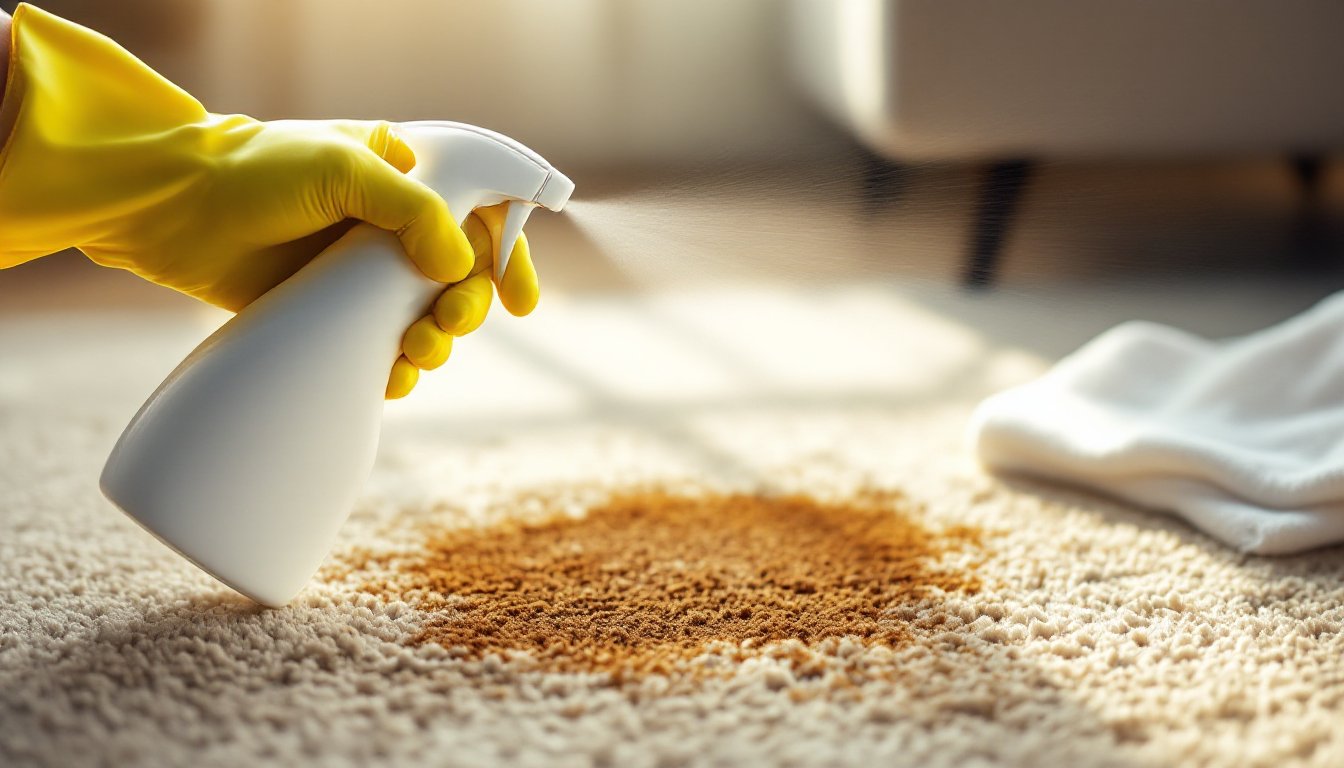
4. Apply the cleaner. Spray a light, even coat over the stained area, extending about an inch beyond the visible stain. For foam, apply a thin layer, more isn’t better. For liquid, saturate the stain without soaking the carpet pad. If you can see standing liquid, you’ve used too much.
5. Dwell time. Let the product sit for the recommended time (usually 3–10 minutes). This gives the surfactants and enzymes time to work. Don’t let it dry completely on the carpet, if it starts to look crusty, you’ve waited too long.
6. Blot or scrub gently. Use a clean white cloth or a soft-bristle brush to work the cleaner into the fibers. For delicate carpets (wool, berber), blot only. For durable synthetics (nylon, polyester), a gentle circular scrub can help. Avoid aggressive scrubbing, which can fray fibers or damage the carpet backing.
7. Rinse if needed. Some formulas require rinsing with plain water to prevent residue buildup. Check the label. If rinsing, spray lightly with water, then blot dry with a fresh towel.
8. Dry and vacuum. Let the carpet air-dry completely, run a fan or open windows to speed the process. Once dry, vacuum again to lift the pile and remove any dried cleaner particles. This final vacuum restores texture and prevents the carpet from feeling stiff.
Safety note: Wear gloves if you have sensitive skin. Work in a ventilated area, especially with solvent-heavy formulas. Keep pets and kids off the carpet until it’s fully dry.
Top Benefits of Using Carpet Cleaner Spray Over Traditional Methods
Why choose a spray over renting a steam cleaner or hiring a service? Convenience and speed top the list, but there are several practical advantages worth considering.
Faster turnaround. Steam cleaners and hot-water extractors can leave carpets damp for 6–12 hours. Carpet cleaner sprays dry in 15–60 minutes, which means less disruption to daily life. You can treat a stain in the morning and have the room back in service by lunch.
Lower cost. Renting a carpet cleaner runs $30–$50 per day, plus the cost of cleaning solution. Professional services start around $100–$200 for a standard room. A quality spray carpet cleaner costs $5–$15 per can or bottle and handles multiple cleanings. For spot treatment and maintenance, sprays offer better value.
No heavy equipment. Extractors weigh 20–40 pounds and require hauling, filling, emptying, and storing. Carpet cleaner sprays fit under the sink and weigh less than a pound. For apartments, condos, or homes without storage space, that’s a big win.
Precision targeting. Sprays let you treat specific stains without wetting the entire carpet. This reduces water use, prevents over-wetting (which can lead to mold or carpet pad damage), and avoids the hassle of moving furniture.
Less risk of damage. Over-wetting is one of the most common DIY carpet-cleaning mistakes. Too much water can delaminate carpet backing, cause dye bleeding, or soak into the subfloor (especially problematic over wood or near walls). Spray cleaners minimize that risk because you control the application more precisely. Guides from The Spruce emphasize that controlled moisture is key to preserving carpet longevity.
Maintenance between deep cleans. Most carpets need professional deep cleaning once or twice a year, but high-traffic areas benefit from interim touch-ups. Spray cleaners extend the life of a professional clean by keeping dirt from building up. Think of it like spot-treating laundry between wash days.
Choosing the Best Carpet Cleaner Spray: Key Features to Consider
Walk down the cleaning aisle and you’ll face a wall of options. Here’s what to look for to narrow the field.
Stain type compatibility. Match the cleaner to your most common problems. Pet owners need enzyme formulas. Families with kids benefit from all-purpose sprays that handle food, juice, and mud. If red wine or coffee are frequent offenders, grab an oxidizing formula.
Carpet fiber type. Synthetic carpets (nylon, polyester, olefin) tolerate most cleaners. Natural fibers (wool, sisal, silk blends) require pH-neutral, gentle formulas. Check the product label, most will specify “safe for wool” or “all carpet types.” When in doubt, test on a hidden corner.
Fragrance vs. fragrance-free. Some sprays leave a fresh scent: others are unscented or use minimal essential oils. If you’re sensitive to fragrances or have allergies, look for hypoallergenic or plant-based formulas. Real Simple often highlights low-VOC and eco-friendly cleaning products in their home guides.
Drying time. Foam cleaners typically dry faster than liquids. If you’re cleaning a busy hallway or rental property turnover, prioritize quick-dry formulas. Labels usually state estimated drying time under normal conditions (70°F, moderate humidity).
Residue level. Cheap sprays can leave a sticky film that attracts dirt, making the carpet look dingy faster. Quality formulas rinse clean or evaporate without residue. Look for “low-residue” or “no-rinse” claims, and read reviews to confirm.
Eco-certifications. If sustainability matters, check for third-party certifications like EPA Safer Choice, Green Seal, or USDA BioPreferred. These indicate lower toxicity and reduced environmental impact.
Container type. Aerosol cans are convenient but run out faster and can’t be reused. Trigger-spray bottles offer better value and let you control spray intensity. Some brands sell concentrated refills, cutting packaging waste and long-term cost.
Price per ounce. Compare unit cost, not just sticker price. A $12 bottle with 32 ounces beats a $7 can with 14 ounces. Budget-friendly doesn’t always mean better value if you’re burning through product.
Finally, read the fine print on dwell time, rinsing requirements, and any warnings about colorfastness or fiber types. The best carpet cleaner spray is the one that fits your specific stains, carpet, and household needs, not the one with the flashiest label.