

Table of Contents
ToggleDealing with mice in your home isn’t just unpleasant, it’s a health hazard and a sign that your property’s defenses have been breached. Traditional snap traps and glue boards have been the go-to for decades, but they’re messy, require direct handling of dead rodents, and often fail to deliver humane, efficient results. Enter the electric mouse trap, a battery-powered or plug-in device that kills mice instantly with a high-voltage shock. No poison, no cleanup nightmares, and no waiting around to see if the trap worked. If you’re tired of wrestling with old-school methods or want a cleaner, more effective way to reclaim your basement, garage, or kitchen, this guide walks you through everything you need to know about choosing, setting up, and maintaining an electronic mouse trap in 2026.
Key Takeaways
- An electric mouse trap delivers an instant, high-voltage shock (6,000–8,000 volts) that kills mice humanely within seconds, eliminating the mess and handling required by snap traps or glue boards.
- Electric mouse traps are cost-effective and reusable, with quality battery-powered models lasting 30–50 kills per set of AA batteries, making them more economical than disposable alternatives over time.
- Proper placement along walls and baseboards where mice travel, combined with pea-sized bait portions, maximizes catch rates—avoid centering traps in open areas where rodents rarely venture.
- Battery replacement, regular disinfection with 10% bleach solution, and monthly inspections for corrosion or damage ensure the electric mouse trap remains effective and safe for long-term use.
- Combining electric traps with sanitation measures—sealing entry points, storing food in airtight containers, and removing crumbs—addresses both symptoms and root causes for complete mouse control.
What Is an Electric Mouse Trap and How Does It Work?
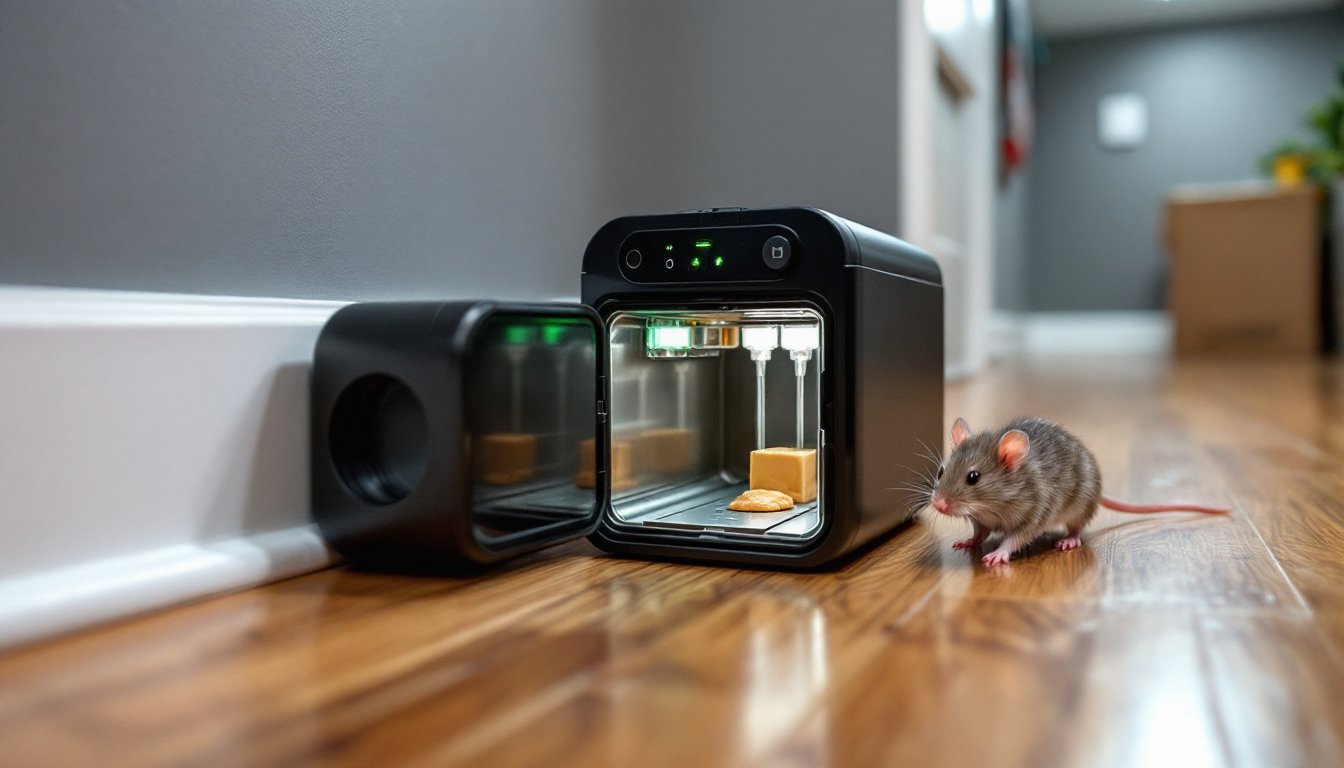
An electric mouse trap (sometimes called an electronic mouse trap or mouse trap electric) is a self-contained unit that lures a mouse into a chamber and delivers a lethal, high-voltage shock, typically 6,000 to 8,000 volts, within seconds. The mouse enters through a one-way tunnel, steps onto metal plates that complete the circuit, and is killed instantly. Unlike snap traps that require you to see and handle the carcass, most electric models feature a covered kill chamber and indicator lights or sounds to signal a successful catch.
Most units run on four AA batteries or can be plugged into a standard 120V outlet, depending on the model. Battery-powered versions are portable and ideal for areas without nearby power sources, attics, crawl spaces, or sheds, while plug-in models suit basements, garages, or utility rooms where outlets are accessible. The kill chamber is usually made of hard plastic with stainless steel plates for conductivity and corrosion resistance.
Bait (peanut butter, chocolate, or sunflower seeds) is placed in a designated compartment at the back of the chamber. When the mouse ventures in to investigate, it breaks an infrared beam or steps on a pressure plate, triggering the shock circuit. Death is nearly instantaneous, and the trap resets automatically in some advanced models. Disposal is straightforward: open a rear hatch or tip the trap over a trash bag, no touching required.
Why Choose an Electric Mouse Trap Over Traditional Options?
Cleanliness and convenience top the list. Snap traps often leave blood and tissue on surfaces, require you to pry the bar off a dead mouse, and can snap shut on your fingers during setup. Glue traps are worse, they trap mice alive, leading to prolonged suffering and loud squeaking that most people find disturbing. Poison baits (rodenticides) create secondary hazards: poisoned mice can die inside walls, causing odor problems, and pets or children can accidentally ingest the bait.
Electric traps solve these issues. The kill is humane and instant, and the enclosed design keeps the carcass out of sight. Many homeowners appreciate not having to witness the aftermath or worry about a trap misfiring. According to recent product testing, no-touch electronic traps score highest for user satisfaction because they eliminate direct contact with rodents.
Reusability is another advantage. A single electric trap can handle dozens of mice if maintained properly, whereas glue boards and poison must be replaced after each use. Over time, that adds up, especially if you’re dealing with a persistent infestation. Battery life on quality models can last for 30 to 50 kills per set of AAs, making them cost-effective for ongoing control.
Finally, electric traps are safer around children and pets than poison or snap traps. The kill chamber is fully enclosed, and most models include safety switches that disable the circuit when the lid is open. Just keep curious pets from knocking the trap over, and you’re good to go.
Key Features to Look for When Buying an Electric Mouse Trap
Not all electronic mouse traps are created equal. Here’s what separates the workhorses from the duds:
Power source flexibility: Battery-powered units offer portability, but plug-in models eliminate the need to monitor battery levels. Some traps offer dual power options, batteries for backup when outlets aren’t available. If you’re placing traps in a finished basement or garage with outlets, plug-in models from brands featured on product review platforms are convenient and low-maintenance.
Kill chamber size: Standard traps handle house mice (Mus musculus), which weigh 0.5 to 1 ounce. If you suspect larger rodents like Norway rats (up to 16 ounces), look for traps rated for rats. The entry tunnel and chamber dimensions matter, undersized traps won’t trigger properly for bigger targets.
Indicator lights or alerts: LED indicators or audible beeps signal a kill, so you’re not checking the trap every few hours. Advanced models send smartphone notifications via Bluetooth or Wi-Fi, overkill for most DIYers, but handy if you’re managing multiple traps in a vacation home or rental property.
Ease of disposal: Look for traps with hands-free dumping mechanisms, rear hatches, tip-and-release designs, or removable kill chambers. You shouldn’t need gloves or tools to empty the trap.
Safety certifications: Verify that the trap is UL-listed or meets equivalent safety standards. High-voltage circuits should have automatic shutoffs when the chamber is opened. Cheap imports sometimes skimp on these features, and that’s a risk you don’t want.
Durability: Metal contact plates should be stainless steel to resist corrosion from urine and cleaning. Hard ABS plastic housings hold up better than thin polypropylene, which can crack if dropped or stepped on. Check user reviews for reports of traps that stop working after a few uses, that’s a red flag.
How to Set Up and Use Your Electric Mouse Trap Effectively
Setup is straightforward, but small details make a big difference in catch rates.
1. Insert batteries or plug in: If using batteries, install four fresh AA alkaline or lithium cells (lithium lasts longer in cold environments). For plug-in models, choose an outlet that won’t be accidentally unplugged.
2. Add bait: Place a pea-sized dab of peanut butter, a small piece of chocolate, or sunflower seeds in the bait cup. Don’t overfill, mice should have to step onto the metal plates to reach it. Avoid liquid baits that can drip onto the circuit.
3. Turn on the trap: Flip the power switch and confirm the indicator light shows the trap is armed. Close the lid fully, most models won’t activate if the chamber is ajar.
4. Position the trap: See placement strategies below.
5. Check and empty: When the indicator signals a kill, open the rear hatch over a trash bag and let the carcass drop out. Wipe the chamber with a disinfectant wipe, rebait if needed, and reset.
Best Placement Strategies for Maximum Results
Mice travel along walls and baseboards, not across open floors, because they rely on whiskers to navigate in the dark. Place traps perpendicular to walls with the entrance facing the baseboard, creating a natural pathway into the chamber.
High-traffic areas show the most activity: behind appliances, under sinks, along garage walls, near water heaters, and in pantries. Look for droppings (small, dark pellets), gnaw marks on cardboard or wood, and grease smudges along baseboards, these indicate active runways.
Avoid placing traps in direct sunlight or damp areas. Heat can degrade batteries faster, and moisture can corrode contacts. If you’re working in a basement with high humidity, consider a plug-in model and keep the trap elevated on a shelf or 2×4 block to prevent water contact.
Use multiple traps if you’ve seen more than one mouse or found droppings in several rooms. Mice reproduce quickly, a single female can have five to ten litters per year, so aggressive trapping is essential. Space traps 10 to 15 feet apart along walls and runways for best coverage.
Safety Tips and Maintenance for Long-Term Performance
Electric mouse traps are low-risk, but basic precautions keep everyone safe.
Never open the trap while it’s armed. Always flip the power switch to “off” before lifting the lid. Most traps have an automatic shutoff when opened, but don’t rely on it, treat every trap as live.
Keep traps out of reach of children and pets. Place them behind furniture, in cabinets, or in areas pets can’t access. The voltage won’t seriously harm an adult, but a curious toddler or small pet poking fingers or paws into the chamber could get a painful shock.
Wear disposable gloves when handling dead mice or cleaning the trap, even though most electric models are no-touch. Mice can carry hantavirus, salmonella, and leptospirosis, pathogens that survive on surfaces. After emptying the trap, disinfect the chamber with a 10% bleach solution or EPA-registered disinfectant. Wipe down the metal plates to remove urine or feces buildup that can interfere with conductivity.
Replace batteries proactively. Don’t wait for the low-battery indicator, swap them out after 20 to 25 kills or every three months if the trap sees light use. Weak batteries reduce voltage, leading to non-lethal shocks that injure but don’t kill mice.
Inspect the trap monthly for cracks, loose wiring, or corroded contacts. If the indicator light flickers or doesn’t turn on, the circuit may be compromised. Manufacturers typically offer one-year warranties, so contact support if the trap fails prematurely. Don’t attempt to repair high-voltage components yourself, replace the unit if it’s defective.
Common Mistakes to Avoid with Electric Mouse Traps
Even the best electric mouse trap won’t work if you set it up wrong. Here are the pitfalls that trip up first-timers:
Overloading the bait cup: Too much bait lets mice nibble from outside the kill zone. A rice-grain-sized amount is enough to lure them in without giving them an easy meal.
Placing traps in low-traffic areas: Mice won’t stumble into a trap in the middle of a room. Stick to walls, corners, and areas with visible signs of activity. If you’re unsure where to start, guides on DIY pest control recommend tracking powder or flour along suspected runways to reveal footprints.
Ignoring sanitation: Traps address the symptom, not the cause. Seal entry points, gaps around pipes, cracks in foundations, and gaps under doors, with steel wool and caulk or expanding foam. Remove food sources by storing pantry items in airtight plastic or glass containers and cleaning up crumbs daily. Mice can squeeze through openings as small as 1/4 inch, so inspect thoroughly.
Not using enough traps: One trap won’t solve an infestation. Deploy three to six traps initially, even if you’ve only seen one mouse. Once activity stops for a week, you can reduce the number.
Forgetting to clean the trap: Dried bait residue, hair, and urine can gum up the mechanism or create odors that deter new mice. Clean the chamber after every few kills and wipe down the exterior monthly.
Mixing control methods carelessly: If you’re also using poison, mice may die before reaching traps. Stick with traps alone, or use poison only in areas where traps aren’t practical (inside walls, via bait stations). Never use both in the same room, it confuses your monitoring and wastes effort.
Electric mouse traps aren’t a magic bullet, but when used correctly, they’re one of the most effective, humane, and low-maintenance tools in a DIYer’s pest control arsenal. Pair them with good sanitation and exclusion work, and you’ll reclaim your space without the mess and hassle of old-school methods.