
Table of Contents
ToggleEvolution table saws have carved out a solid reputation among DIYers and home renovators for one key reason: they cut materials most table saws can’t touch. While traditional saws stick to wood, Evolution machines handle steel, aluminum, plastic, and composites without blade changes or coolant. That multi-material capability makes them a smart choice for remodelers working with metal studs, PVC trim, or mixed-material projects. This guide breaks down what sets Evolution apart, which models deliver the best value, and how to get the most from these workhorses in your shop.
Key Takeaways
- Evolution table saws cut wood, steel, aluminum, plastic, and composites with a single blade, making them ideal for mixed-material remodeling and deck projects without tool changes.
- The RAGE5-S offers 27-inch rip capacity at $300–$400 for serious multi-material work, while the FURY5-S provides a compact, budget-friendly $250–$325 option for occasional metal cuts.
- Proper setup—verifying fence alignment within 1/16 inch and blade squareness—takes 30–45 minutes and prevents binding and kickback during rip cuts.
- Metal dust is conductive and abrasive; connect a shop vac during every session and inspect TCT blades after every 10–15 metal cuts, replacing when teeth show chipping or wear.
- Evolution table saws excel for jobsite tasks like notching steel studs, cutting composite decking, and ripping treated lumber, but deliver cleaner results than abrasive saws or dedicated metal tools in half the time.
What Makes Evolution Table Saws Stand Out
Evolution’s signature feature is multi-material cutting technology. Their carbide-tipped blades use a tooth geometry and RPM profile designed to cut ferrous metals, non-ferrous metals, wood, and plastics with the same blade. The blades spin slower than standard woodworking saws, typically around 3,500 RPM versus 4,000-5,000 RPM, which reduces heat buildup and prevents work-hardening in metals.
The trade-off? Cut quality in hardwoods doesn’t match a dedicated cabinet saw with a fine-tooth blade. Evolution saws deliver clean cuts in construction-grade lumber, plywood, and treated material, but if you’re milling figured walnut or doing fine joinery, you’ll want a different tool. They’re built for the remodeler who needs to rip 2×6 framing one hour and notch steel angle iron the next.
Most Evolution table saws include a TCT (Tungsten Carbide Tipped) multi-material blade in the box, a miter gauge, and a rip fence. The fences are serviceable but not precision-ground like higher-end woodworking saws. Expect to check square and parallel with a combo square before critical cuts. The arbor size is typically 1 inch, and blade diameter ranges from 8.25 to 10 inches depending on the model.
Safety features align with industry standards: blade guards, anti-kickback pawls, and paddle switches for quick shutoff. Evolution saws don’t include flesh-sensing technology like SawStop, so proper technique and push sticks remain essential. Always wear safety glasses and hearing protection, cutting metal generates sparks and noise levels above 90 dB.
Top Evolution Table Saw Models for DIYers and Homeowners
Evolution RAGE5-S: Best for Multi-Material Cutting
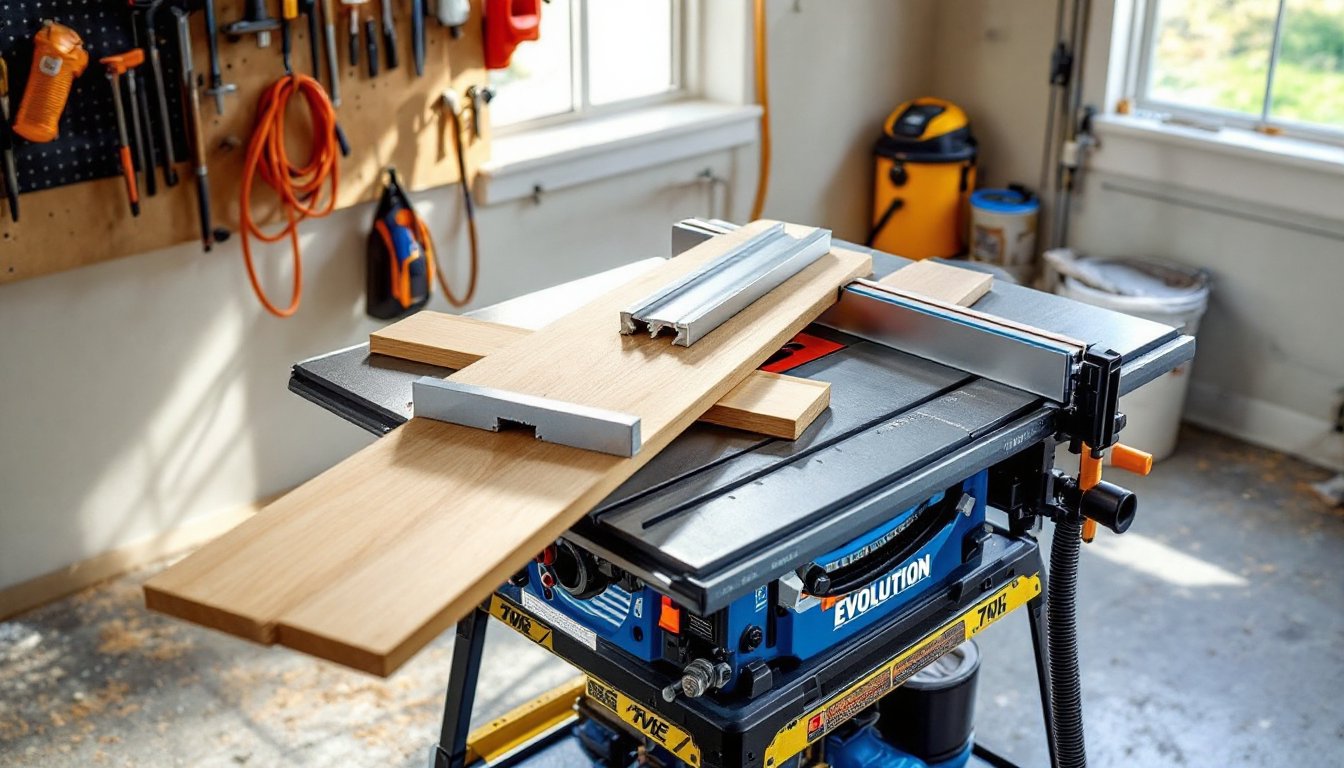
The RAGE5-S is Evolution’s most popular 10-inch model, offering a 255mm (10-inch) blade, 1500-watt motor, and rip capacity up to 27 inches to the right of the blade. It handles 3-inch depth of cut at 90 degrees and 2 inches at 45 degrees, which covers most framing and remodeling tasks. The saw ships on a stamped steel stand with folding legs, portable enough for jobsite work but stable for small shop use.
This model excels when cutting mild steel up to 1/8-inch thick, aluminum extrusions, copper pipe, and composite decking. The blade leaves burr-free edges on metal that require minimal cleanup compared to abrasive chop saws. According to a recent table saw review, the RAGE5-S delivers clean cuts and smart design features that make it jobsite-ready.
Weaknesses include fence flex under heavy lateral pressure and a miter gauge with noticeable slop. Upgrading to an aftermarket miter gauge (look for models with adjustable stops and metal bodies) improves crosscut accuracy. The dust port is 2.5 inches and connects to most shop vacs, but metal dust is fine and abrasive, use a vacuum rated for metal particulate and change filters frequently.
Expect to pay around $300-$400 depending on retailer and regional pricing. That puts it in the upper range of portable contractor saws but below entry-level hybrid models. For mixed-material work, the value proposition is strong.
Evolution Power Tools FURY5-S: Compact Power for Small Workshops
The FURY5-S shares the same 10-inch blade and multi-material capability as the RAGE5-S but in a lighter, more compact footprint. Rip capacity drops to 24 inches, and the stand uses a simpler design without wheels. Motor output is slightly lower at 1200 watts, which handles most DIY projects but may bog down in thick steel or sustained ripping of pressure-treated lumber.
This model suits garage workshops with limited space or homeowners who prioritize portability over max capacity. The smaller motor draws less amperage, making it compatible with standard 15-amp household circuits without tripping breakers during startup. Many users working on woodworking project plans appreciate the saw’s ability to handle both lumber and metal hardware in furniture builds.
Setup is straightforward, unbox, bolt the fence rail to the table, attach the blade guard, and verify blade alignment with a square. The blade comes pre-installed but always check arbor tightness before first use. The manual specifies right-hand thread (tighten clockwise), and the arbor lock button simplifies blade changes.
Pricing typically runs $250-$325, making it the budget-friendly entry into Evolution’s lineup. If your work involves occasional metal cuts and standard dimensional lumber, the FURY5-S delivers without the extra cost of higher-capacity models.
How to Set Up and Maintain Your Evolution Table Saw
Initial setup takes 30-45 minutes. Start by assembling the stand per the manual, legs, cross-braces, and table attachment bolts. Use a torpedo level to ensure the table sits flat before tightening all hardware. Next, mount the rip fence rail. The rail attaches with four bolts: snug them but don’t fully torque until you’ve checked fence parallel to the blade.
To verify fence alignment, measure from the fence face to the front tooth of the blade, then to a rear tooth (rotate the blade by hand). Measurements should match within 1/16 inch. If the fence toes in or out, loosen the rail bolts and tap the fence into parallel before re-tightening. This step prevents binding and kickback during rip cuts.
Check blade square with a combination square or speed square against the miter slot. The blade should read 90 degrees to the table. Adjust the trunnion bolts under the table if needed, this requires accessing the underside, so tip the saw on its back or remove the insert plate for access. Set the 45-degree positive stop the same way using the bevel adjustment.
Blade maintenance is critical for multi-material saws. Metal cutting dulls blades faster than wood. Inspect teeth after every 10-15 cuts in steel: if you see chipping or rounded tips, it’s time to sharpen or replace. Evolution blades can be professionally sharpened 2-3 times before replacement. A dull blade generates excessive heat, increases kickback risk, and leaves ragged edges.
Clean the blade after cutting metal. Use a degreaser and stiff brush to remove pitch and metal particles from the gullets. This prevents buildup that causes vibration and poor cuts. Store extra blades flat in protective sleeves, hanging them by the arbor hole can warp the plate over time.
Dust collection matters more than most DIYers think. Metal dust is conductive and abrasive. It’ll scratch table surfaces, clog moving parts, and create electrical hazards if it accumulates around the motor. Connect a shop vac to the dust port during every session. Empty the vac frequently, metal shavings are heavy and reduce suction quickly.
Lubricate the elevation and bevel worm gears every six months with white lithium grease. Wipe down the tabletop with paste wax (the same stuff used for router tables) to reduce friction and prevent rust. If the saw lives in a damp garage, a light coat of paste wax after each use keeps the cast iron surfaces from oxidizing.
Common Projects Perfect for Evolution Table Saws
Deck framing with metal joists: Many modern decks use galvanized steel joists instead of treated lumber. An Evolution saw cuts these to length without the noise, sparks, and heat of an abrasive saw. Pair the table saw with a metal-cutting circular saw for field cuts, but do layout and precision cuts at the saw table.
Composite deck board installation: Brands like Trex and TimberTech contain wood fiber and plastic. Standard carbide blades gum up quickly: Evolution’s multi-material blade handles these cleanly. Set the rip fence for board width, and use a zero-clearance insert to prevent bottom-surface chipout.
Cutting aluminum angle for shelving or brackets: Aluminum extrusions for shelving systems, screen frames, and DIY workbenches cut quickly on an Evolution saw. Clamp a stop block to the fence for repetitive cuts, much faster than measuring each piece individually. Wear gloves when handling fresh-cut aluminum: edges are sharp and can cause deep cuts.
Notching steel studs for electrical runs: Remodelers working with metal framing can notch studs for conduit or junction boxes right at the saw. Mark the notch width, set the blade height to the stud depth, and make multiple passes to remove material. This beats tin snips or a reciprocating saw for clean, repeatable notches.
Ripping treated lumber for raised beds or fencing: Pressure-treated 2×10 or 2×12 stock for landscape projects rips cleanly with the multi-material blade. The slower RPM reduces burning in wet, treated wood. Always wear a dust mask rated N95 or higher when cutting treated lumber, copper and arsenic compounds in older treatments are hazardous, and even newer ACQ formulations irritate lungs.
Crosscutting PVC trim boards: PVC trim melts with high-RPM blades. Evolution’s slower speed and tooth design minimize melting and leave factory-quality edges. For outdoor projects combining wood siding and PVC trim, having one saw handle both materials speeds workflow. Resources like Family Handyman offer project tutorials that often incorporate mixed materials where this capability shines.
Cutting Hardie board or fiber cement: Fiber cement siding and trim is brutally hard on standard blades. Evolution blades cut it without the dust explosion of a score-and-snap method, though you’ll still generate silica dust. Use wet-cutting techniques or a vacuum attachment, and always wear respirator protection rated for silica, fiber cement dust causes silicosis with repeated exposure.
Conclusion
Evolution table saws earn their place in a home shop by doing what dedicated wood or metal saws can’t: handling both materials without downtime for blade swaps or tool changes. They’re not precision cabinet saws, and they won’t replace a plasma cutter for heavy steel work. But for remodelers, deck builders, and DIYers juggling mixed-material projects, they remove the bottleneck of switching between tools. Set them up square, keep the blade sharp, and manage the metal dust, and they’ll handle years of hard work without complaint.